How Oldham is using regeneration to unlock opportunity
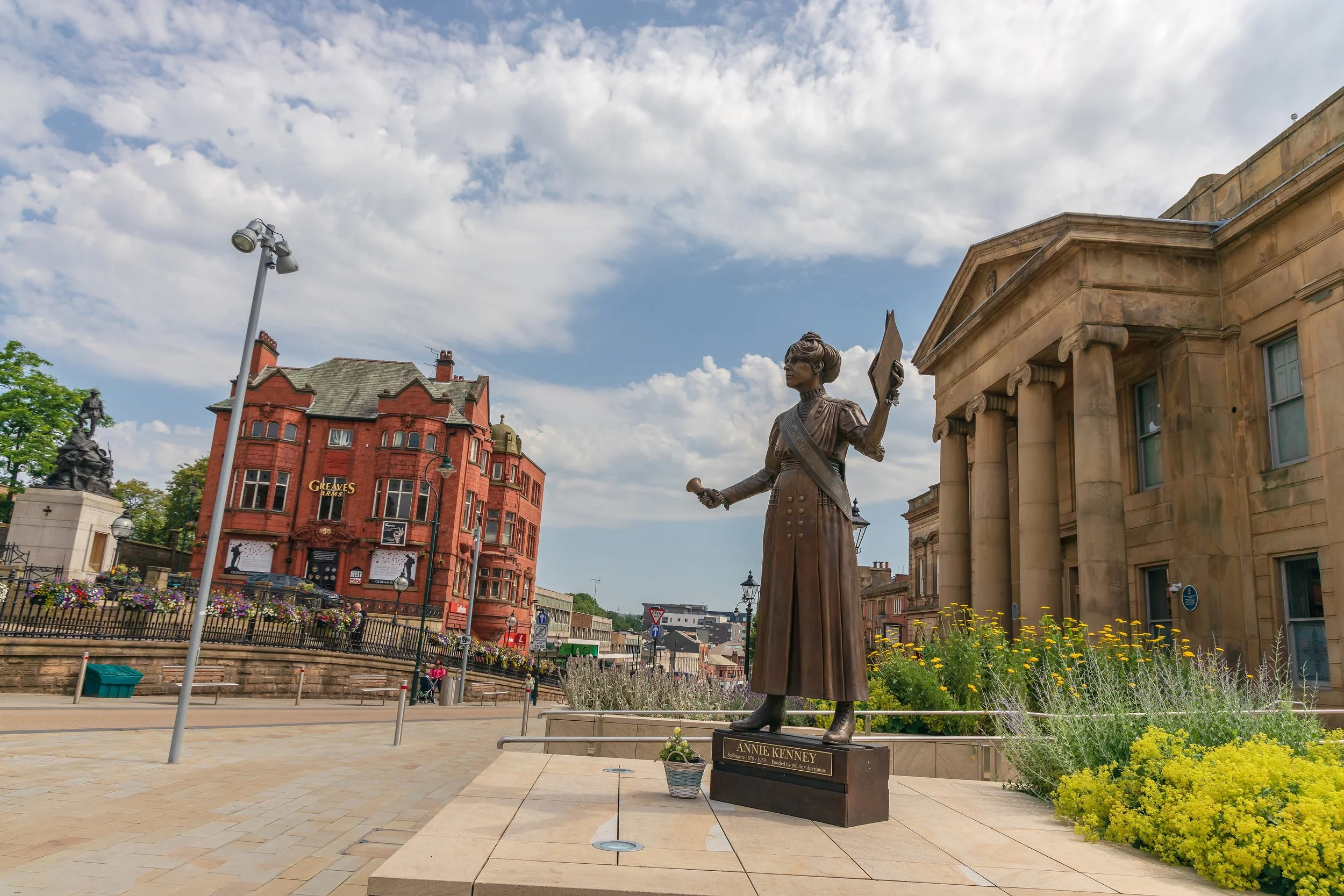
When we talk about regeneration, it’s often shorthand for cranes, construction and shiny new buildings. But in places facing long-standing deprivation, bricks and mortar alone rarely provide the answer.
In our blog this month, we’re looking at one of Greater Manchester’s northern towns, Oldham, a place that’s historically faced entrenched deprivation, but where the message from the council is clear: they’re determined not to let the people of Oldham down.
Here, the challenge runs deeper than physical improvements. It’s about participation, trust and access to opportunity. That means helping people connect with those places and ensuring regeneration genuinely reflects what residents need. Across Oldham Council’s work, there’s a strong sense of hope and ambition for what the borough can become.
That’s far harder than securing planning permission and wheeling excavators out to site. But it’s where meaningful change begins.
A co-operative approach shaped by leadership
In 2011, Oldham branded itself as a Co-operative Council, committing to “sitting down together” to understand what residents need and how to deliver results that benefit the whole borough. Communities in Oldham are treated as active participants in shaping the borough’s future.
The move highlighted Oldham’s strong political leadership and its principle that every pound of public investment should deliver a tangible benefit for Oldham’s communities.
This philosophy impacts how the council communicates and engages with people. Rather than expecting the people to come to them – and recognising that not everyone is online or has English as their first language – Oldham has created the refreshingly analogue publication Working For You. Delivered directly to homes, it keeps people informed and involved. And information is, ultimately, power.
Reshaping the town centre around local need
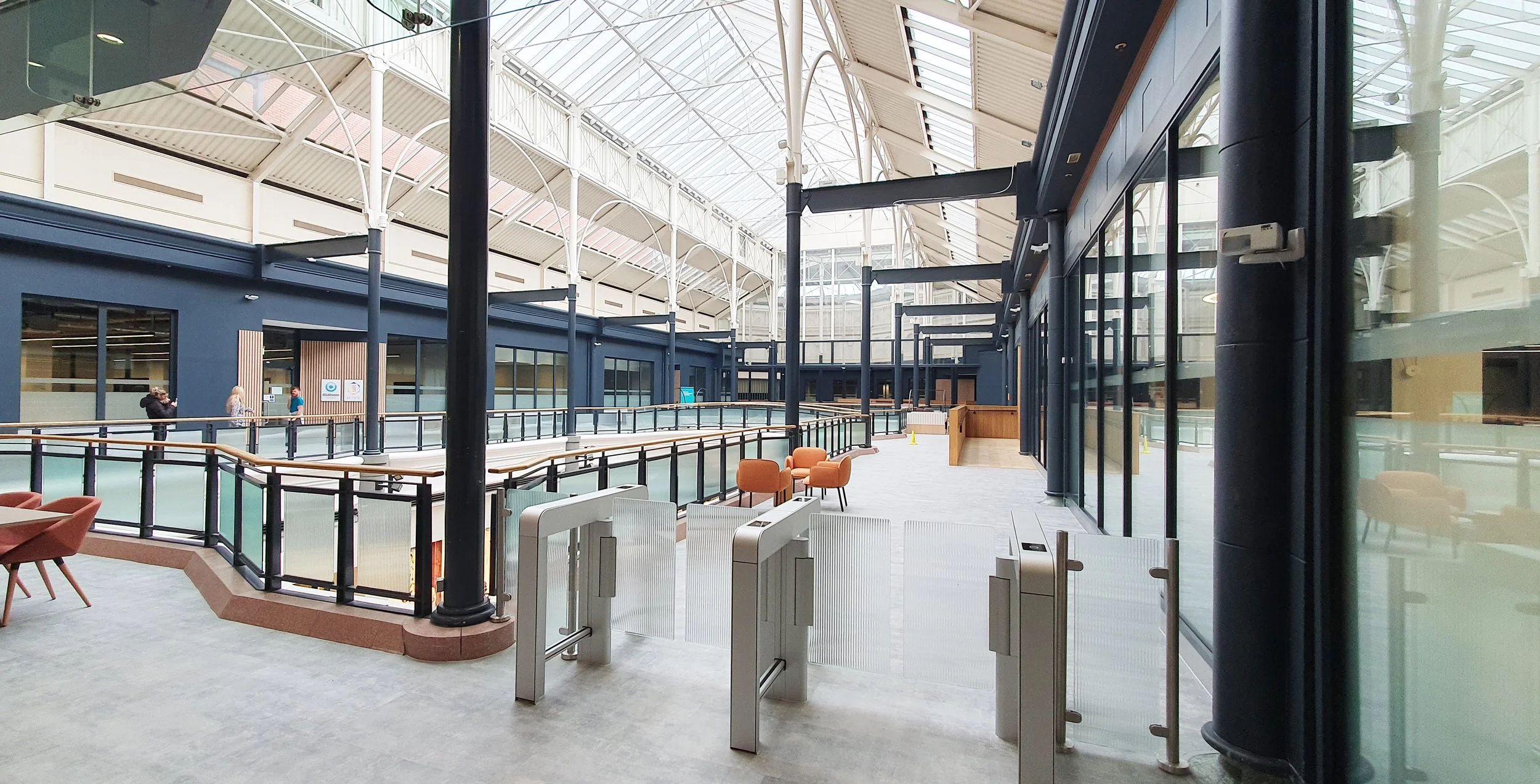
Award-winning Spindles redevelopment. Credit: AEW Architects
The council’s acquisition of the Spindles shopping centre is one of the clearest examples of that co-operative thinking in action.
Part of the council’s Building a Better Oldham programme, the move, which included relocating council office accommodation into the centre, signalled a willingness to step in rather than risk letting the town centre, and the people who depend on it, down.
Informed by the Big Oldham Conversation – itself another example of Oldham’s people-first approach – the message was clear. People didn’t want more retail. Instead, the proposals evolved into something broader: a mix of civic space, market activity, workspace and cultural uses alongside retail. It’s a shift which reflects a deeper understanding of how town centres now function. In a place like Oldham, regeneration has to support daily life as much as destination shopping.
The resulting scheme is now proud bearer of the British Council of Offices’ Innovation Award for how it “reimagines urban regeneration” and repurposes a failed asset into thriving workspaces that make a social impact.
Linking health, skills and opportunity
Another example of Oldham’s place-based approach is SportsTown, a £70m campus initiative that goes beyond improving access to leisure facilities.
Health inequalities are a well-documented challenge in areas facing deprivation. Oldham’s approach links health provision with education, training and career opportunities. On top of state-of-the-art facilities, SportsTown will create health and educational facilities, and support pathways into employment, particularly in health and wellbeing professions.
It’s a practical response to two challenges at once: improving public health while also creating routes into work and training. It reflects the council’s wider ambition that investment should do more than improve the physical environment — it should actively improve people’s prospects.
And it’s been made possible through targeted funding from the GMCA – a prime example of how Greater Manchester’s “togetherness” is helping individual towns pursue their own priorities.
Turning housing need into housing want
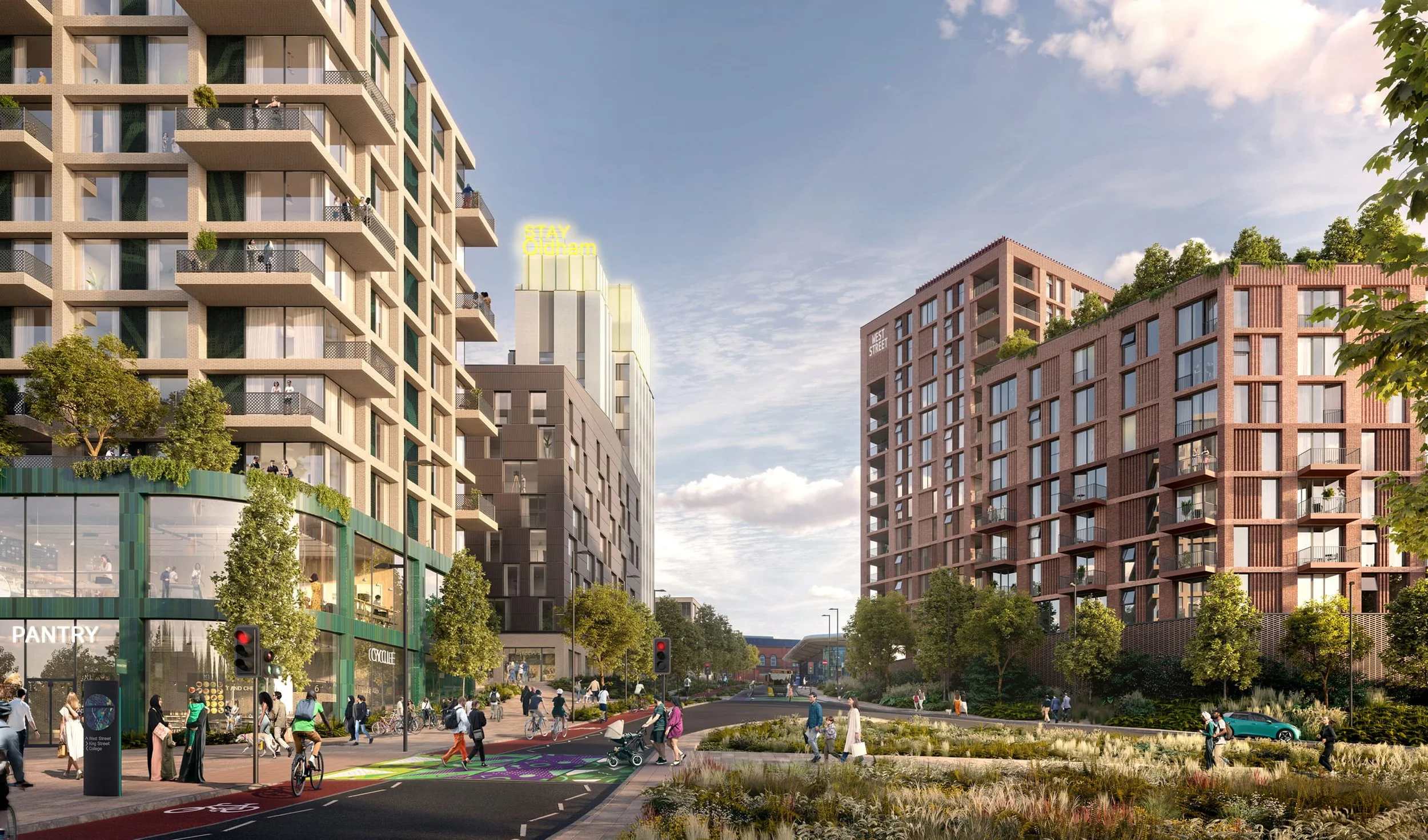
Oldham Town Living. Credit: Muse
Oldham’s next major chapter focuses on housing and the future of the town centre. The ambition isn’t simply to meet housing targets (it’s 2,000 new homes in the town centre by 2039, if you’re wondering). Oldham’s Chief Executive, Shelley Kipling, has explained that the focus now is about turning housing need into “housing want” speaking to a wider sense of confidence about Oldham’s future and the belief that the borough can offer more than affordability alone.
To achieve this, the council has formed a development partnership with Muse focused on transforming six sites in the town centre into new neighbourhoods where people genuinely want to live.
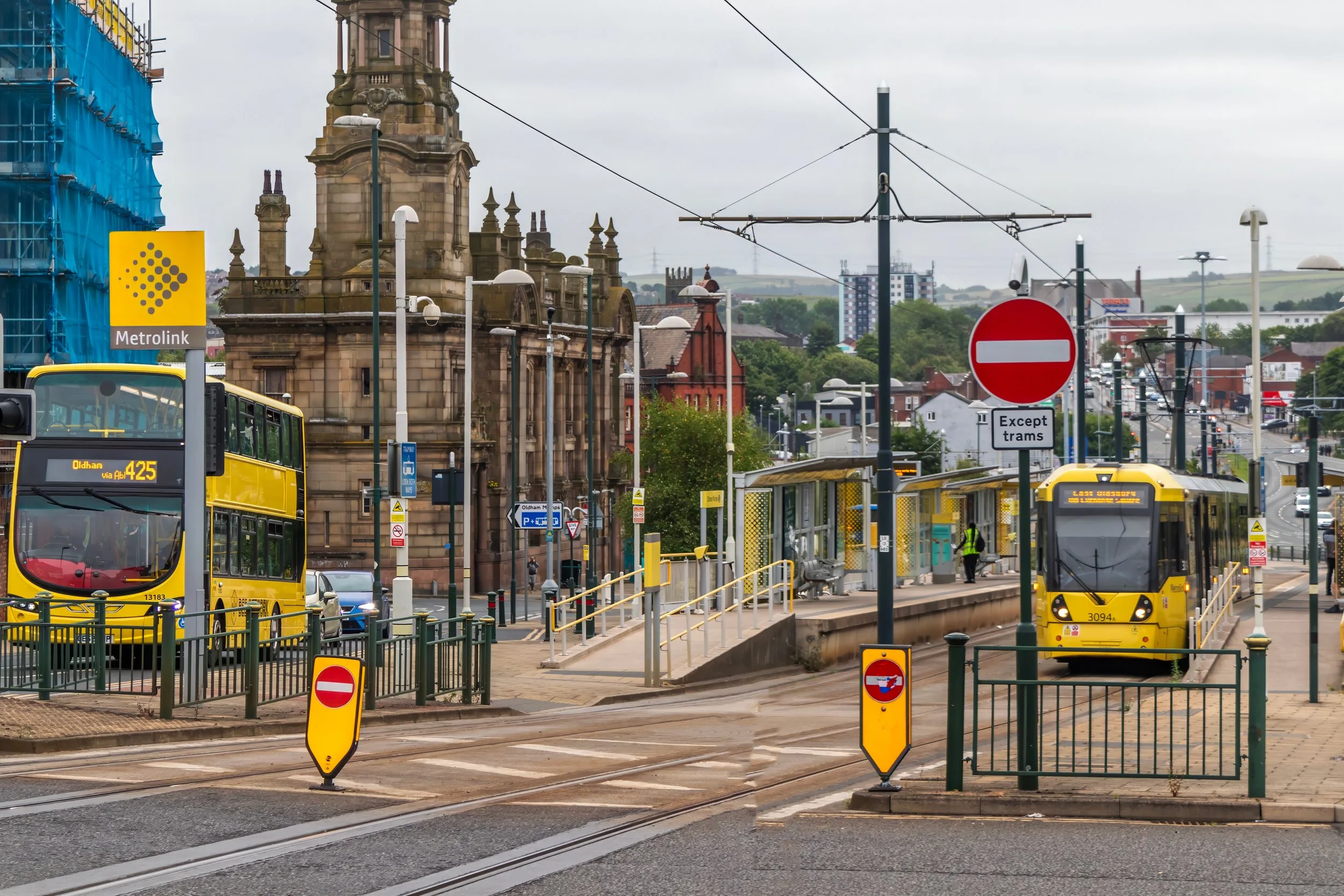
Plans of this scale don’t land out of the blue: they build on what’s gone before. Most notably for Oldham, the Metrolink extension which reached Oldham Mumps in 2012. This, itself, reflected GMCA’s belief that Oldham had the right ingredients in place: ambition, leadership and clear direction of travel. And those same ingredients are now giving partners like Muse the confidence to invest in Oldham’s future.
With all six planning applications approved at committee in July 2025, work on site at the first scheme, Prince’s Gate, is well underway.
Success here will ultimately depend on getting the balance right: creating homes that meet local demand while also attracting new residents, investment and activity into the town centre.
Regeneration that starts with people
Oldham’s story highlights an important lesson for regeneration. Physical change alone is rarely enough: regeneration works best when it proactively tackles the causes of deprivation head on.
Engagement is the starting point, and it must be more than a box-ticking exercise. When consultation becomes structural rather than occasional, it builds trust and legitimacy for long-term change.
And when physical change is connected to skills, opportunity and community participation, the results are more likely to last.
Oldham is a borough determined to deliver growth, but the right kind of growth – the sort that unlocks opportunity, restores confidence and ensures residents benefit from the borough’s progress. That combination of leadership, engagement and partnership is helping to create a regeneration approach rooted in reality rather than theory.