Manchester then and now: Retracing 20 years in the original modern city
I still remember standing at the Bridgewater Hall in April 2006, looking up at the 47-storey Beetham Tower during the official topping-out ceremony. Dwarfing all else, the top-heavy structure made a strong statement: Manchester had arrived.
The city was riding a wave following two steady decades of urban regeneration, including the important work of the Central Manchester Development Corporation, Hulme Regeneration Limited and Manchester Millennium Limited.
Investment was flowing, cranes were multiplying, planning applications were being submitted for schemes rising to 60 storeys, and there was a quiet confidence that the sky was the limit. Just over two years later, however, the global financial crisis had already started to bite.
A city on pause
The crash, when it came, was abrupt and unforgiving. Schemes stalled overnight and by the end of 2008 we were regularly waking up to news of yet another contractor or developer shutting up shop. Hoardings sealed off sites that would sit untouched for years. Across city centre were half-finished sites; Issa Developments’ Sarah Point on Great Ancoats Street, along with the infamous concrete structure on River Street near the Mancunian Way both came to be symbols of the sector’s failure.
I found myself documenting development sites across the city centre, almost instinctively. In March 2009, I stepped out to conduct my first ‘Development Update’ – something I would repeat again in 2019. Surface-level car parks were popping up right across the city, replacing that previous sense of ambition with resignation.
It’s easy to forget just how bleak it felt. Not just economically, but psychologically. The narrative had shifted from inevitability to uncertainty. And uncertainty is something that the markets really don’t like.
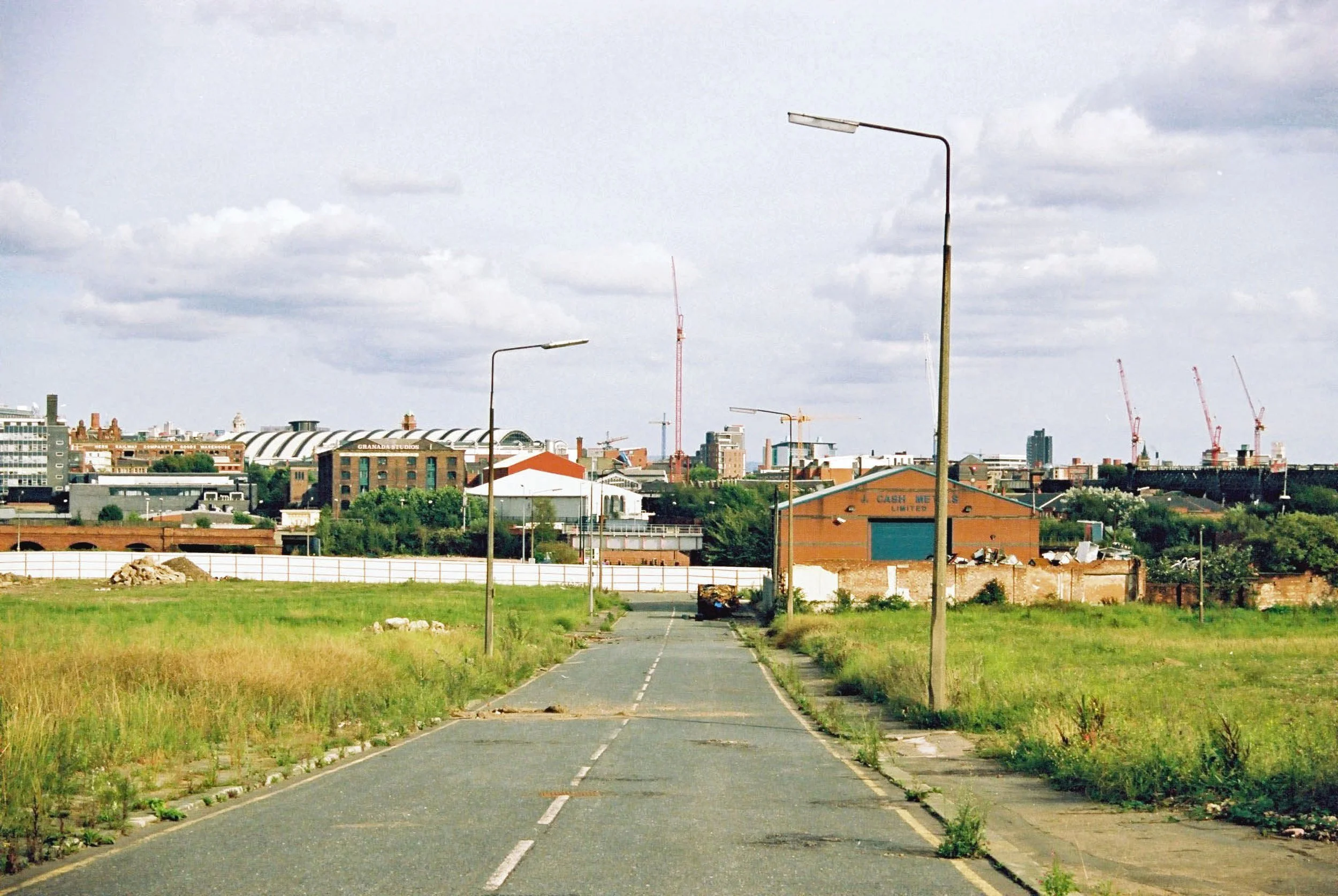
Looking east along Rolling Street from Salford towards Manchester city centre, capturing the crane at Beetham Tower’s construction site (2003). Credit: Steve Welsh
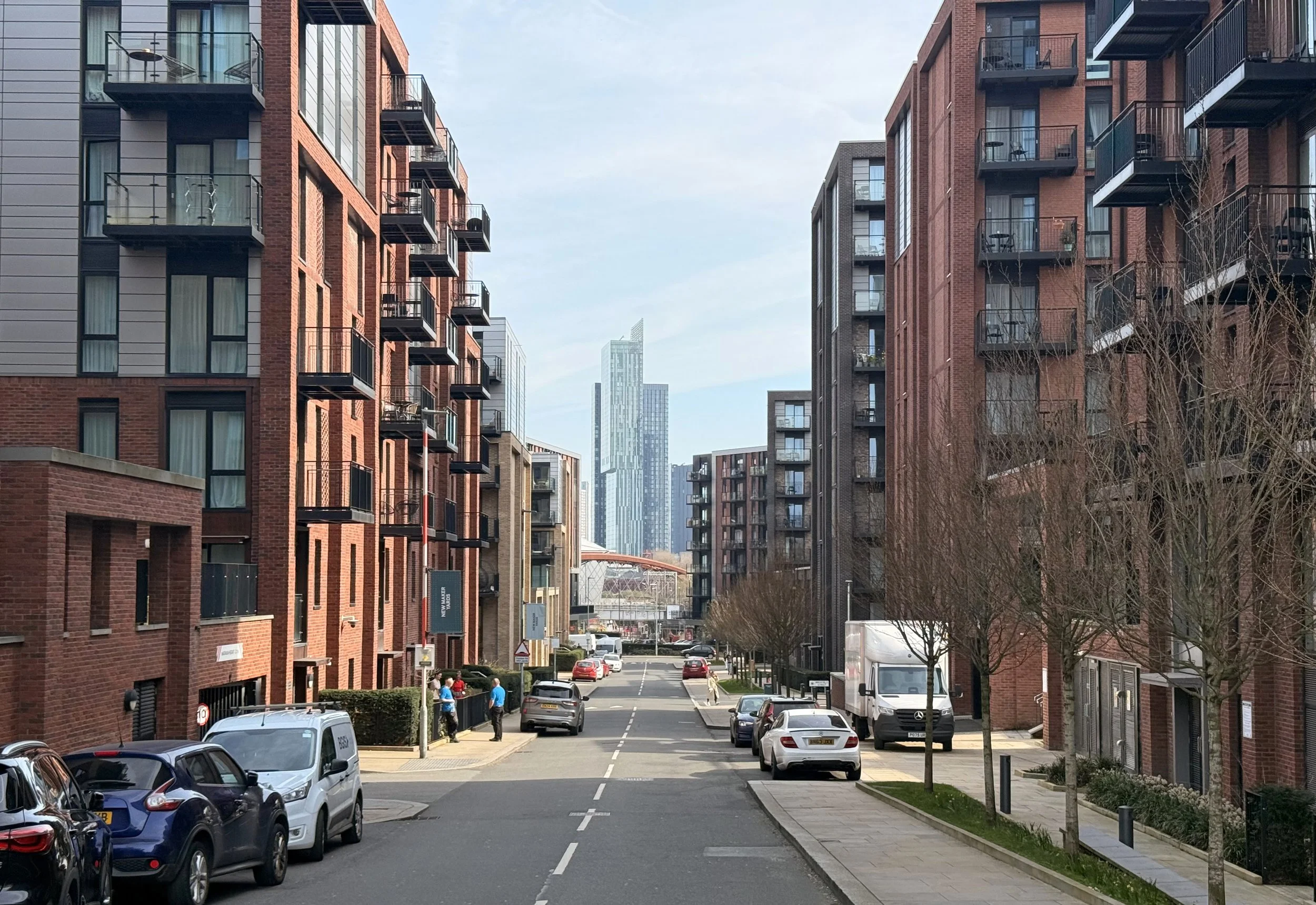
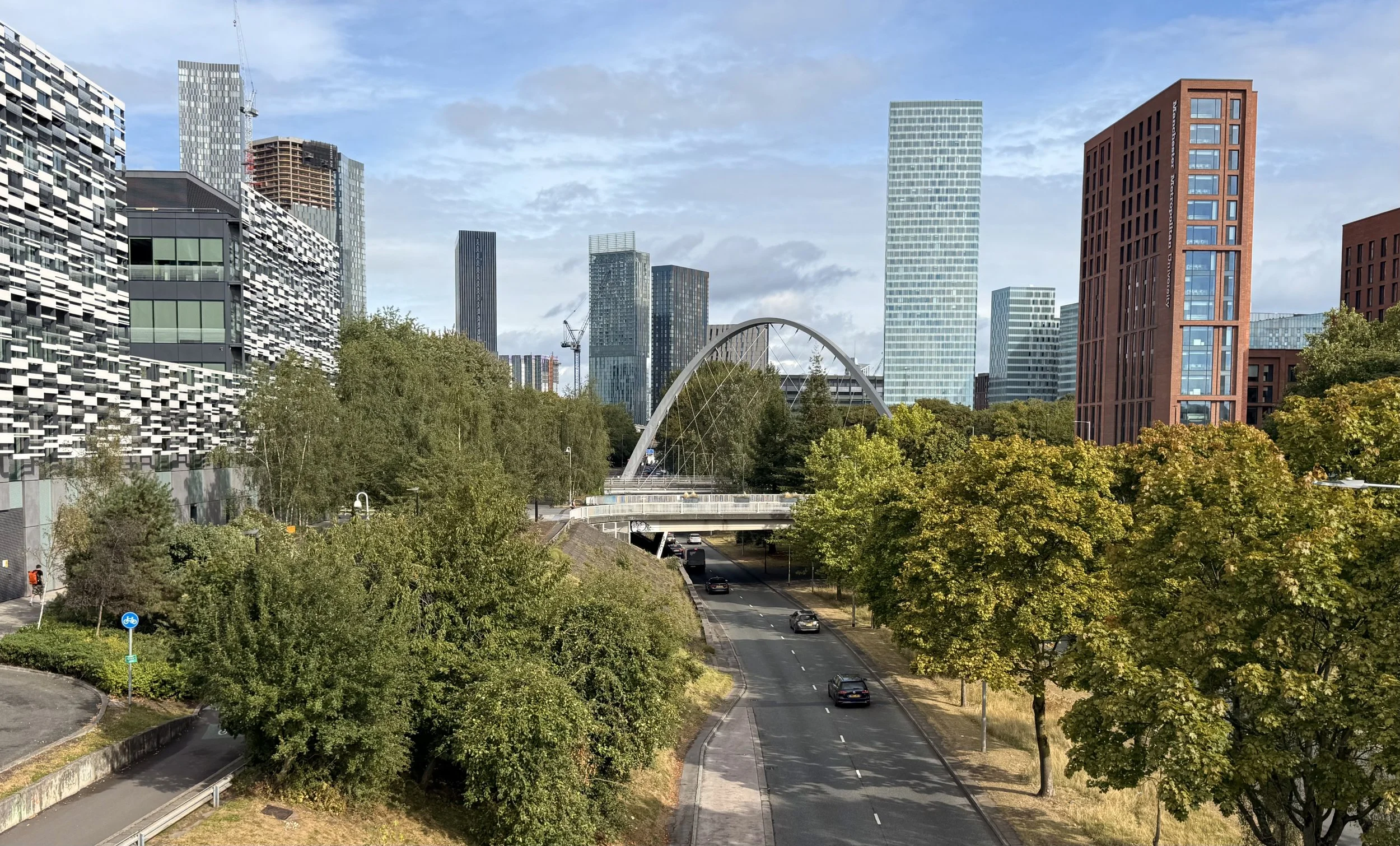
Looking east along Rolling Street from Salford towards Manchester city centre through Middlewood Locks development (2026).
Resetting the terms
I’d been closely following Manchester’s change following the IRA bomb on 15 June 1996, taking photos with my disposable camera that showed the scale of devastation. In what felt like the height of modernity, I catalogued these changes on a website I created - ‘Rebuilding Manchester’ - which I updated for almost 15 years.
As the financial crisis took hold in 2009, I saw an opportunity to write a book which told Manchester’s story from a planning and regeneration perspective. In what became something of a passion for me, I took every opportunity to interview key players in the sector including the city council’s leaders, Sir Richard Leese and Sir Howard Bernstein, former leader Graham Stringer, and former Deputy Prime Minister, Lord Michael Heseltine.
If the boom years had been characterised by speed and optimism, the years after the crash were defined by scrutiny. Manchester City Council had been stung by the sudden loss of promised developments which lay mothballed and adopted a noticeably different tone. With the drop-off in planning applications, it would’ve been understandable if it had chosen to lower standards and wave schemes through unchecked. Instead, the council did the opposite, raising the bar and showing a steeliness that hadn’t been as visible before. Developers were expected to do their homework and prove their schemes were viable, deliverable and would make a positive contribution to the ambitions of the city.
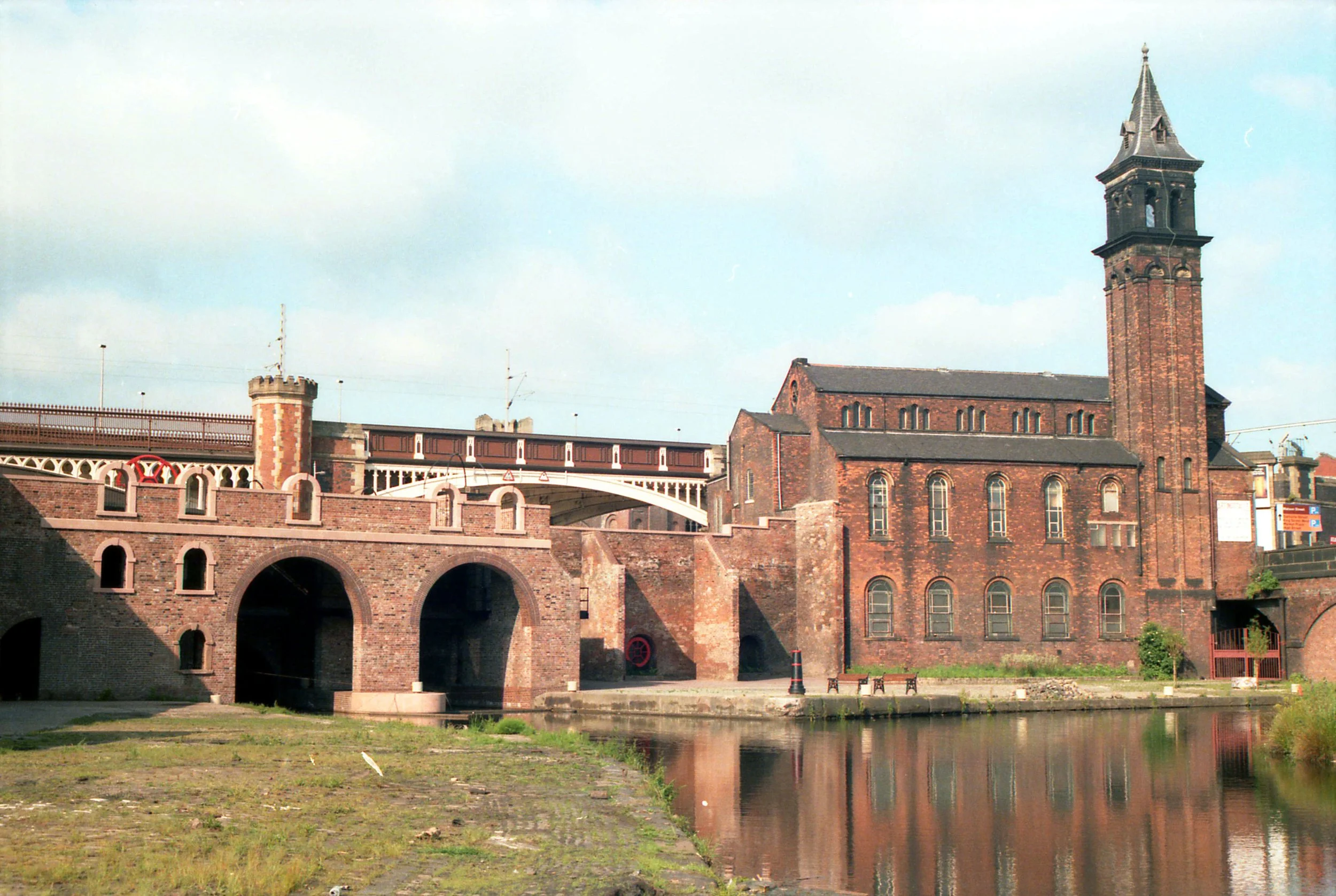
From Castlefield looking towards the the decaying former Congregational Chapel in Deansgate (1998). Credit: Steve Welsh
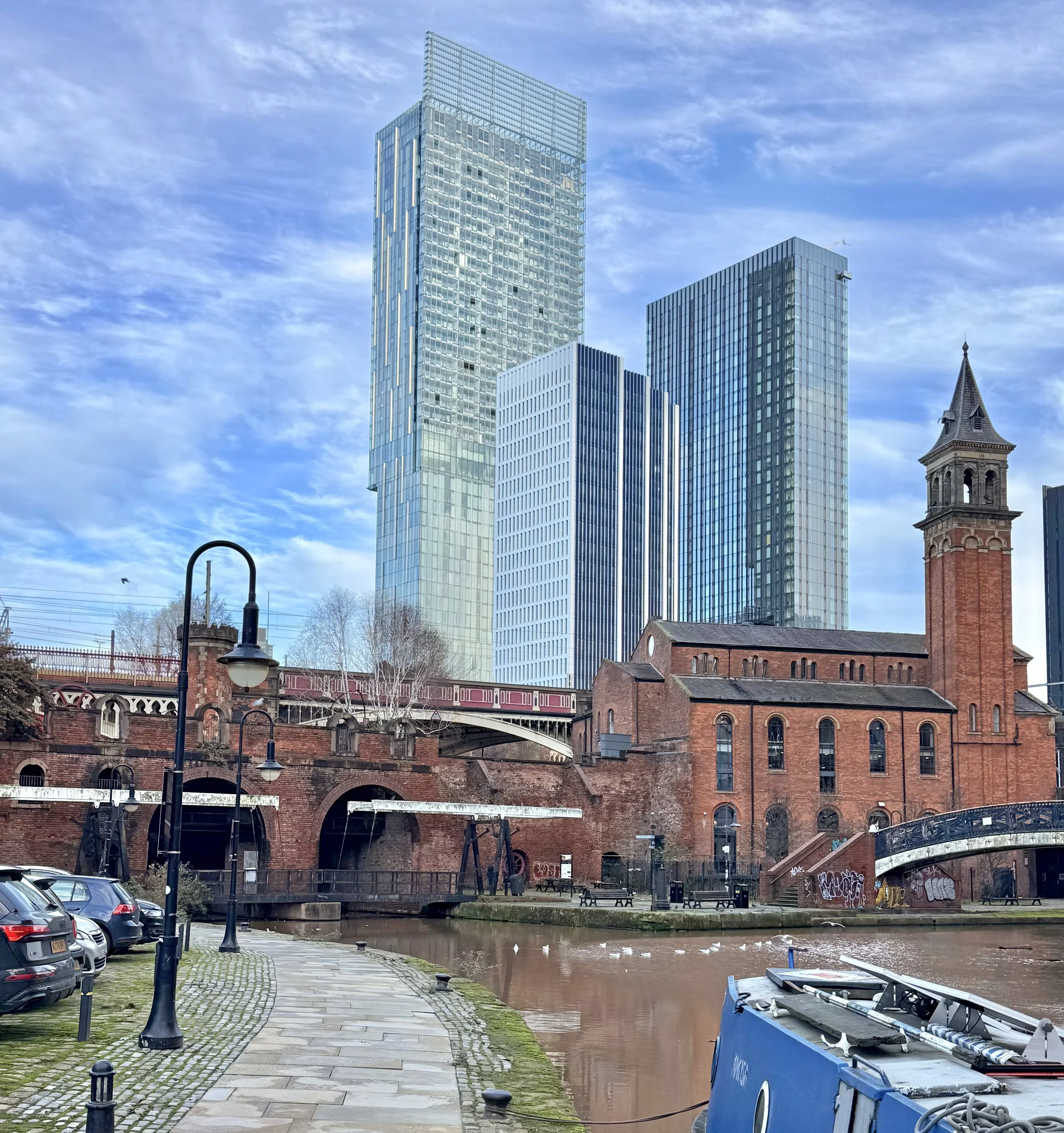
In the backdrop now are SimpsonHaugh Architects’ Beetham Tower, Manchester Deansgate Hotel by IHG, and Viadux.
In many ways this was the council reasserting control over the city’s direction and actively shaping what would, and wouldn’t, get built. This bold move would, in time, pay off.
While the cranes had come to a standstill, the council moved quickly to update its City Strategy document. Badged as a business and regeneration document (not merely a planning document), this call-to-action emphasised the role of cross-sector partnership, with Cityco – a partnership between the business community and the public sector – playing a central role. The strategy identified key priorities for a patchwork of neighbourhoods across the city centre, all of which have been transformed in the years following, with a series of cross-city measures that would be ‘pursued vigorously’.
This deliberate approach feels deeply rooted in the Mancunian spirit. It’s there in the city’s origins in the Industrial Revolution, in its response to the 1996 IRA bombing, and in the way it handled the aftermath of the crash. Manchester has long claimed to be the ‘original modern city’, and here it was acting like one. The message was simple: things would improve, and when they did, the city would be ready to move, on its own terms.
The council’s temporary relocation to No.1 First Street in 2010 exemplifies this spirit in action. It signalled confidence in an emerging neighbourhood, putting it on the map, and giving developers the confidence to follow suit. The transformation of the then-defined ‘Southern Gateway’ into First Street and New Jackson has been remarkable.
These early moves by the council, and others like it, were key: it understood its role in setting the scene and stepping out first, to build confidence and pave the way for the inevitable recovery. And when it did come, it arrived with force.
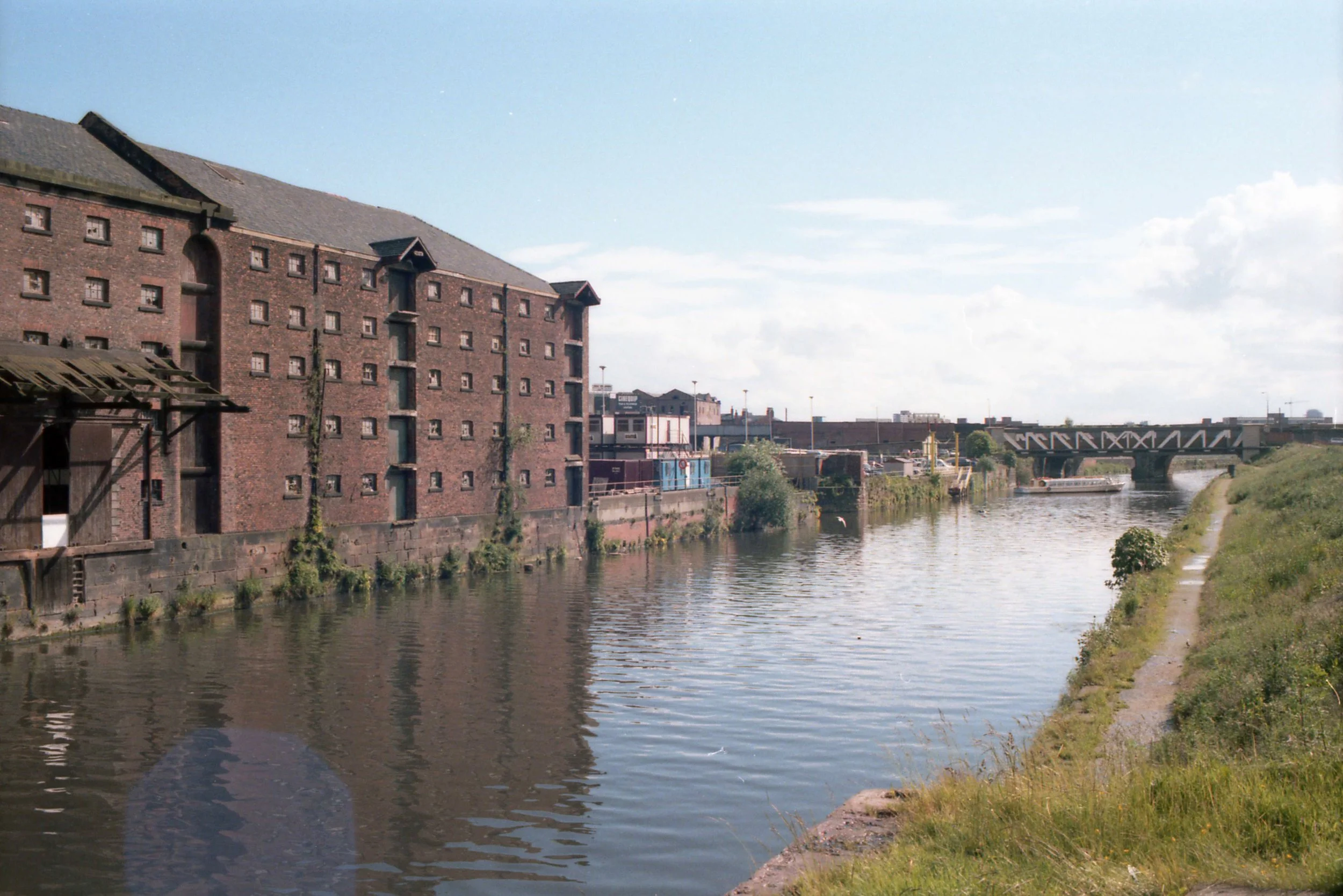
The view south-west from the Irwell Bridge, New Quay Street as it was in 1991. Credit: Steve Welsh
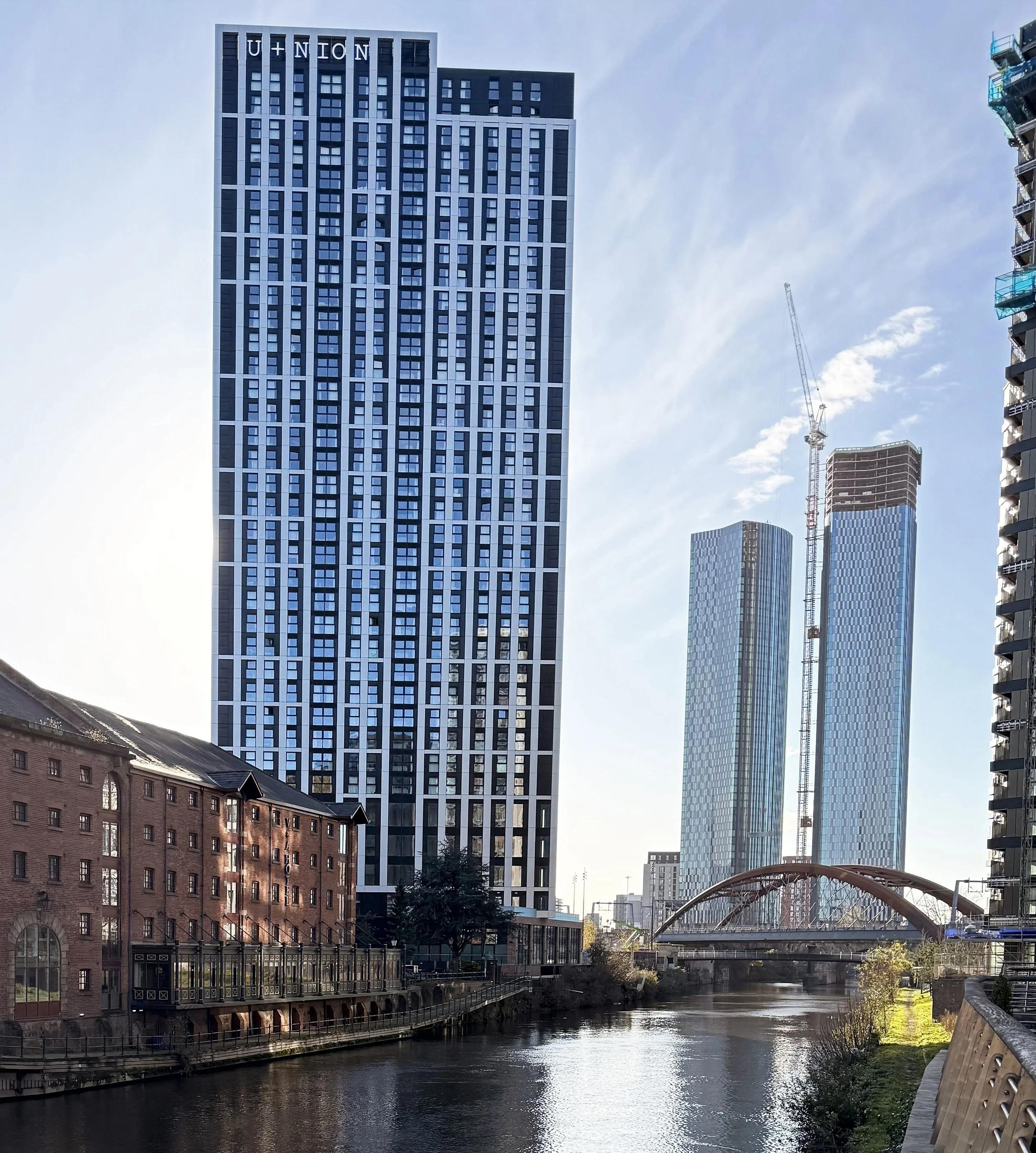
The view now incorporates ttwo +55-storey towers by SimpsonHaugh Architects on Trinity Island for Renaker.
A city reawakens
Over the past decade or more, Manchester has transformed at a pace that would have been hard to predict in 2009.
The city centre has expanded in every direction. Entire neighbourhoods have been redefined. Manchester’s ingenuity shows up across the city: buildings find a new purpose and development appears in places you’d never have thought possible. Property Alliance Group’s AXIS is perhaps the clearest example, squeezing 172 apartments into a 28-storey tower that overhangs the Rochdale Canal from a footprint of just 300sqm.
The transformations keep coming.
Over the past 15 years, east Manchester and the city fringe have been reshaped through major regeneration partnerships. The Etihad Campus has evolved from former industrial land and the legacy of the 2002 Commonwealth Games into one of Europe’s most significant sports‑led regeneration projects. Anchored by the Etihad Stadium and City Football Academy, it combines elite sporting facilities with education, leisure and community infrastructure. Jointly driven by the council and Manchester City Football Club/City Football Group, more than £700m has been invested since 2008, supporting thousands of jobs and repositioning East Manchester as a major destination.
Nearby, Manchester Life, established in 2014 as a partnership between the council and Abu Dhabi United Group, has played a central role in the revival of Ancoats and New Islington. It has delivered around 1,500 homes across nine developments, including Manchester’s first large‑scale, purpose‑built private rental schemes, alongside the conversion of historic mills. Once the engine room of the Industrial Revolution, it’s now an eclectic, characterful neighbourhood where historic mills and cultural institutions sit comfortably alongside a marina and waterside living. This coordinated, place‑first approach has restored confidence in east‑of‑centre living and establish Ancoats as one of the UK’s most distinctive and successful regeneration stories.
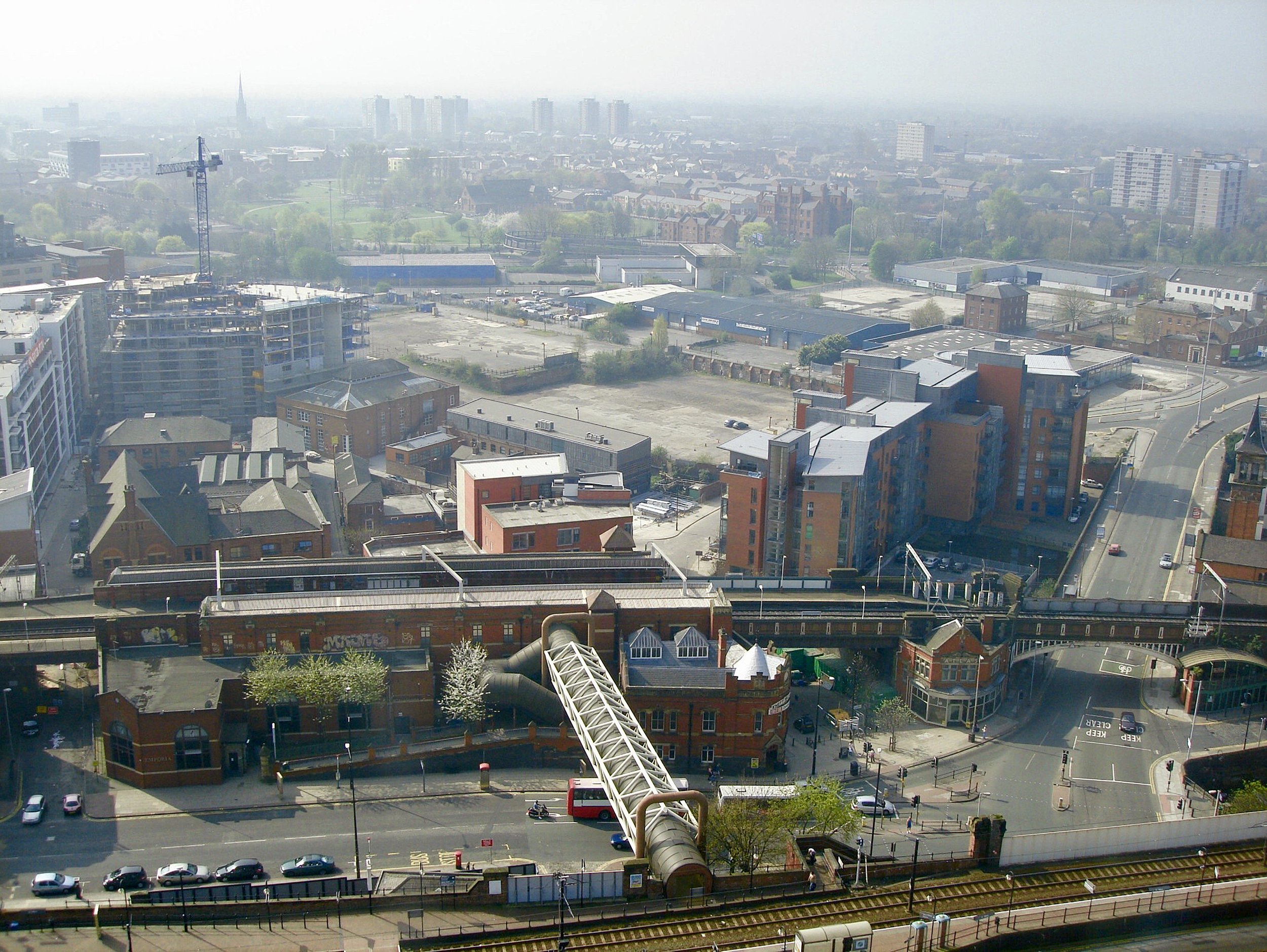
A bird’s eye view of the New Jackson skyscraper district – formerly known as the Great Jackson Street Regeneration Area (2007).
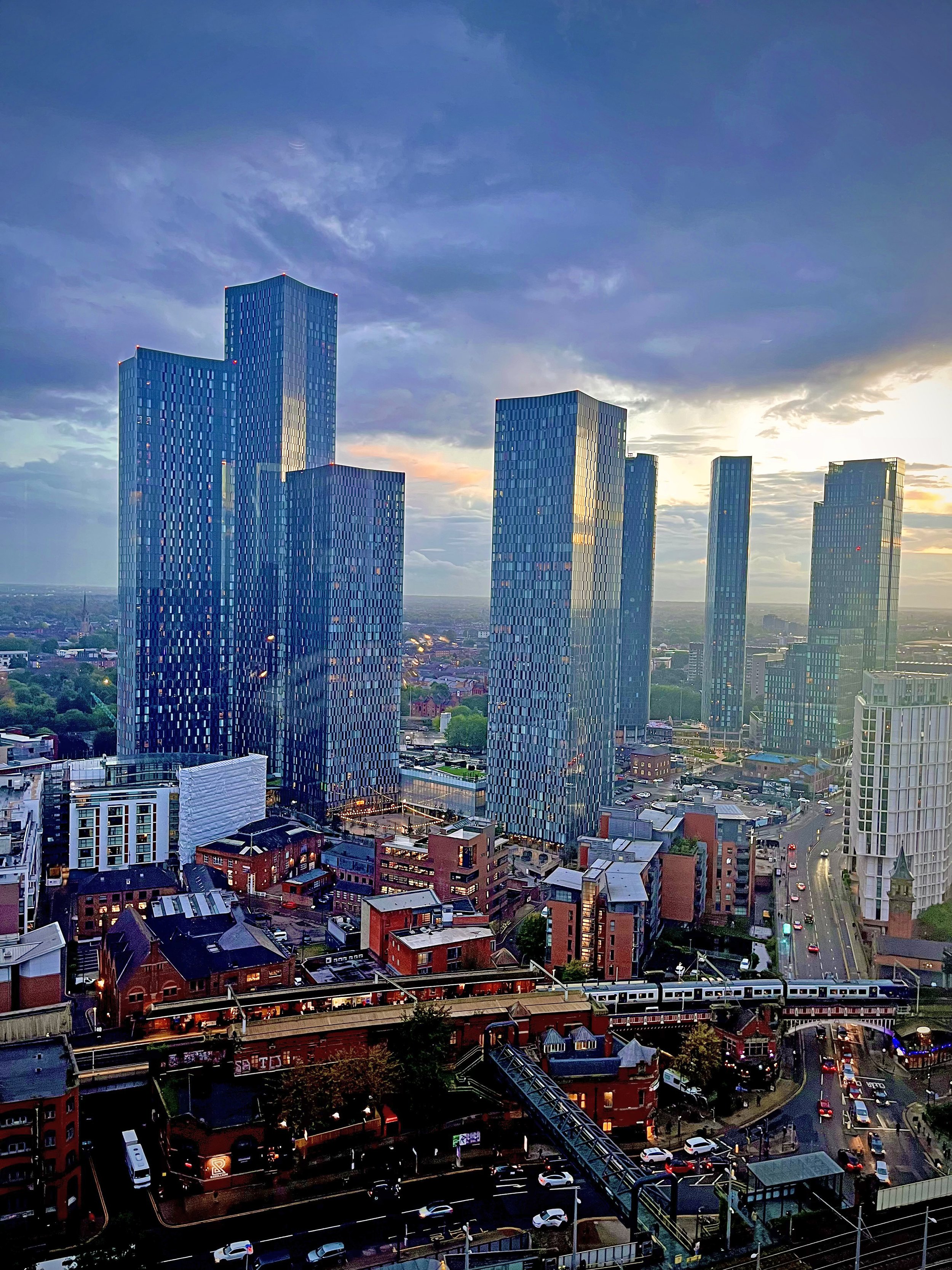
The same view today shows new residential blocks developed by Rennaker, designed by SimpsonHaugh. Credit: Ellie Philcox.
Elsewhere, Enterprise City, a cluster of tech, media and creative workspaces, has attracted global firms and helped drive innovation-led growth, while Aviva Studios provides a flagship cultural anchor that strengthens the city’s international creative reputation. Together they power the wider St John’s regeneration project, a £1bn mixed use district on the former Granada Studios site that’s repositioning Manchester’s city centre offer around a blend of commercial and creative industries, urban living, culture and leisure. Across the Irwell, the same waves of growth have transformed Salford’s city core, with the growth of Greengate, New Bailey and Chapel Street reinforcing how closely the fortunes of the two cities are intertwined.
Manchester’s ‘skyscraper district’, New Jackson, will provide around 7,000 new homes. It has truly transformed Manchester’s skyline.
Yet this pace and scale of change has brought its own challenges. Tall buildings remain a point of contention, particularly around context and affordability.
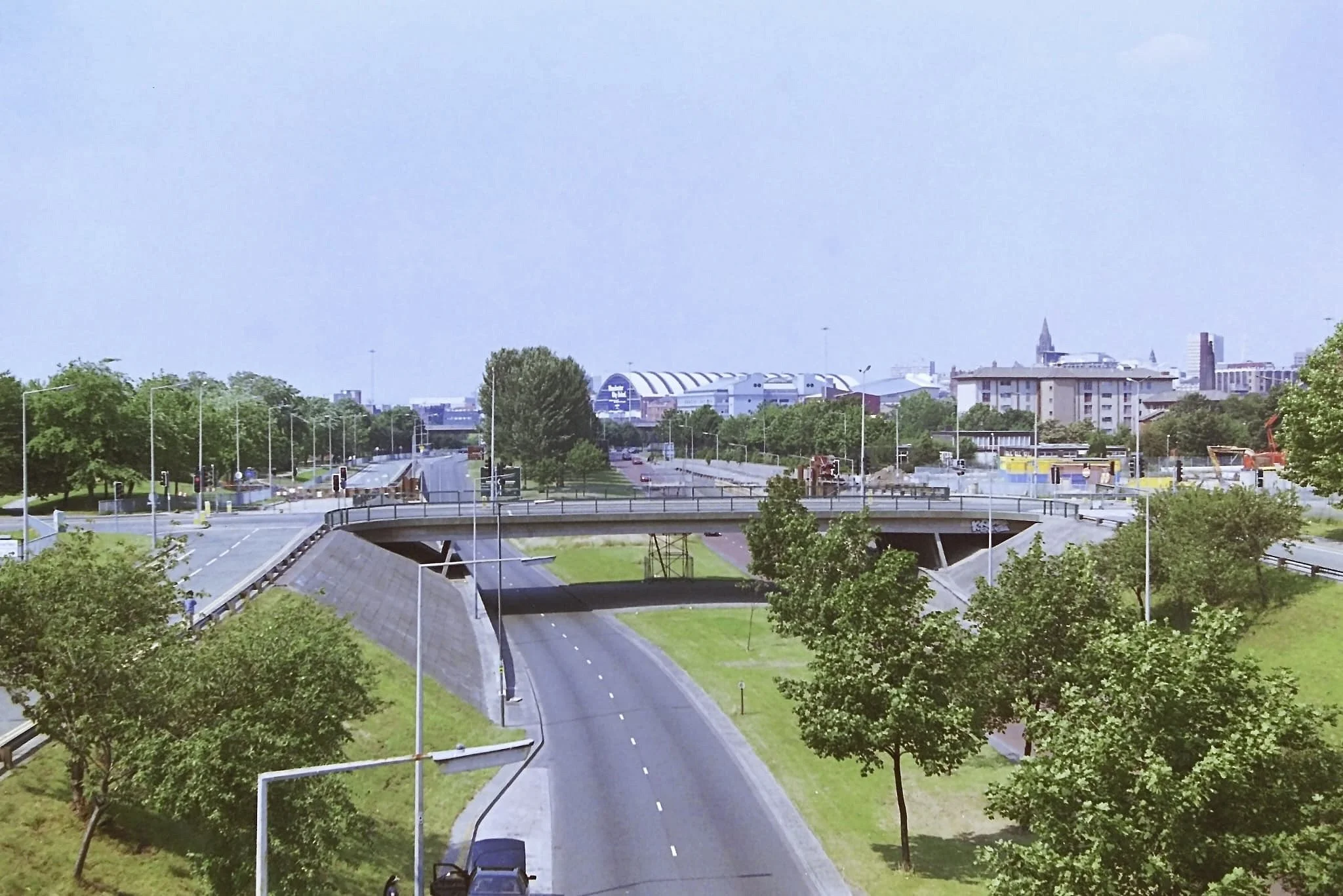
Just four decades separate this view (1986) and the shot on the right, both taken from the same spot looking north from the Epping Walk Bridge. Credit: Steve Welsh
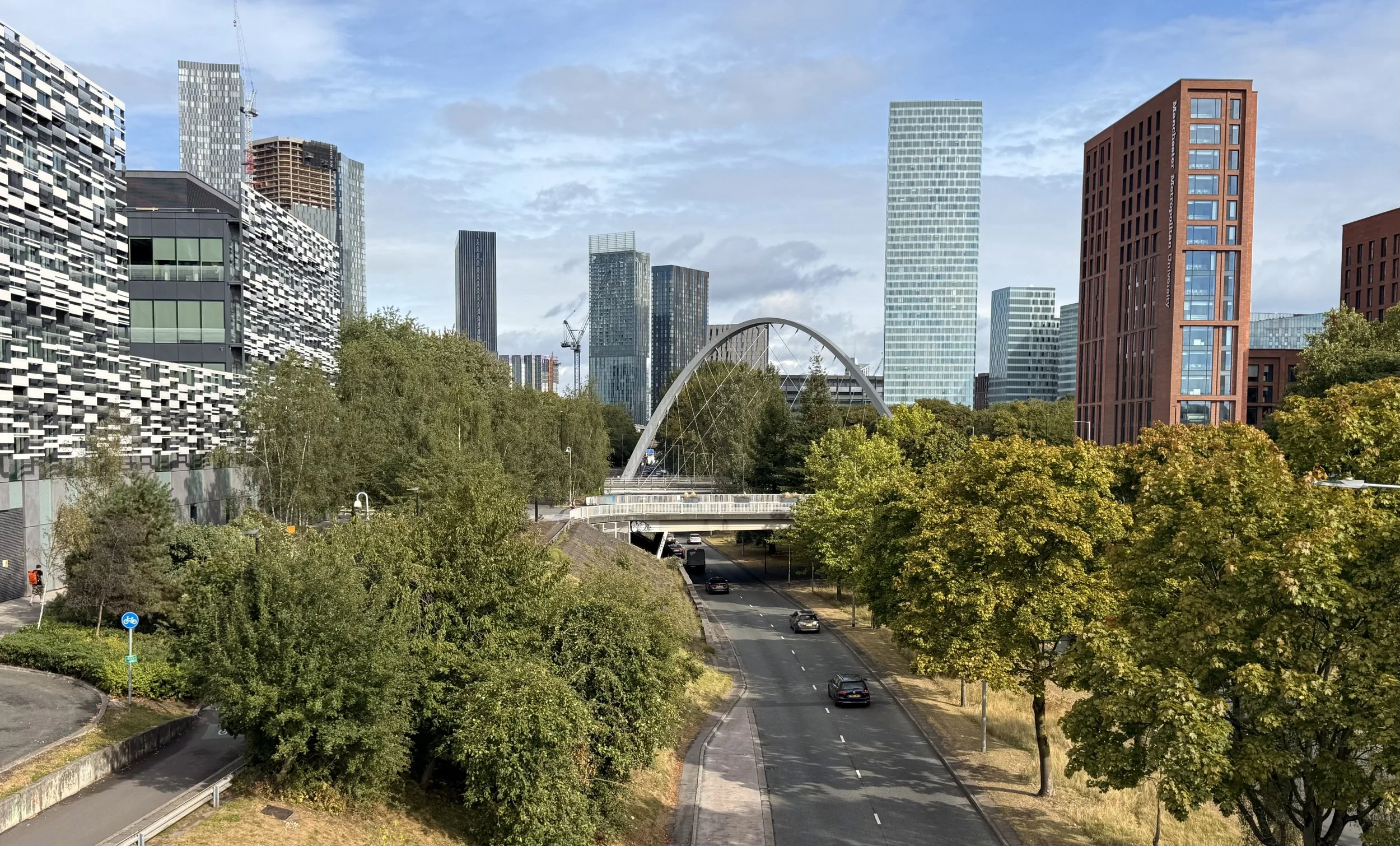
Now, the old G:Mex conference centre – now Manchester Central – has been hidden by a wave of development.
The city’s deliberately pragmatic approach to affordable housing, designed to unlock development and maintain momentum through weaker market conditions, attracted criticism from those questioning who truly benefited. However, with Manchester now operating from a far stronger market position and affordable housing expectations beginning to increase alongside it, there’s an argument that this flexibility helped create the confidence and viability needed to reach this point.
As the city has surged ahead, places like Collyhurst and Miles Platting have seen significant change, with more on the horizon. There have been valid questions raised about displacement and identity, and how growth connects with surrounding communities. Alongside this, there’s a growing recognition that infrastructure and social provision have not always kept pace with the rate of development, reinforcing the sense that growth has, at times, moved faster than the systems needed to support it.
These tensions are as much part of the story as the successes. They reflect a city that’s still working to strike the right balance attracting inward investment and meeting the needs of its residents, mindful that the former does, ultimately, help achieve the latter.
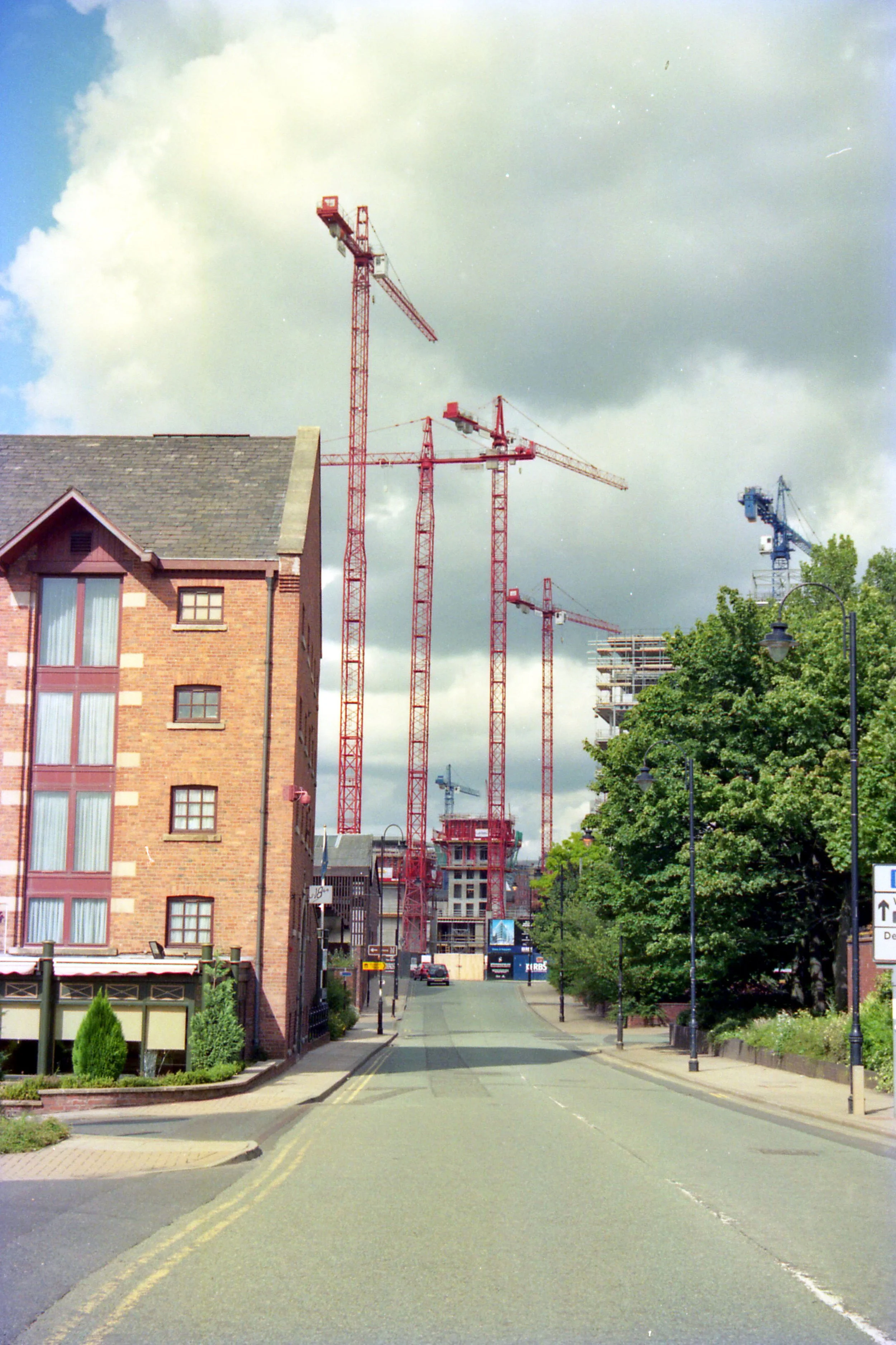
Looking north along Water Street towards Allied London’s under-construction Spinningfields development in 2003. Credit: Steve Welsh
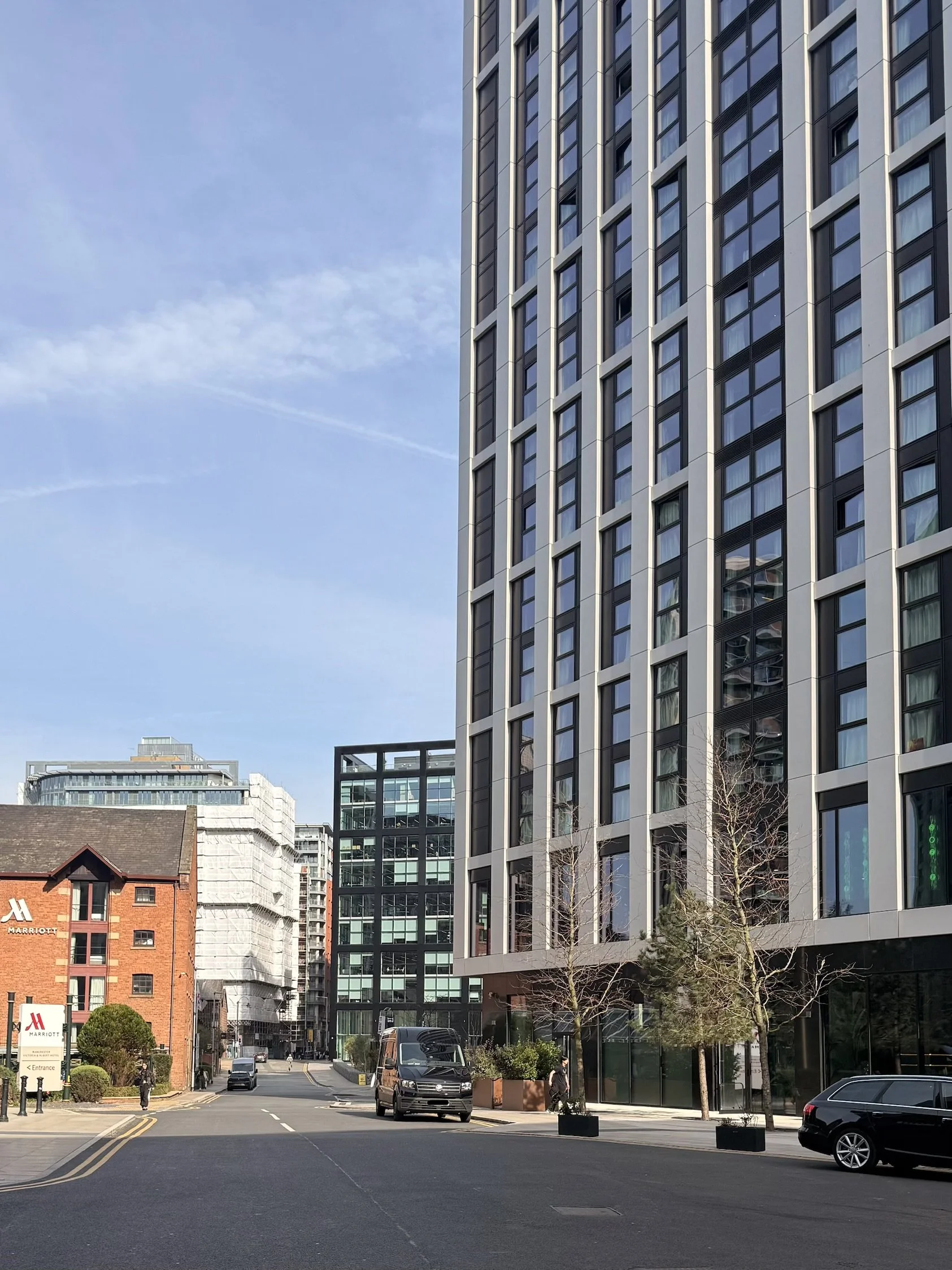
This view shows (centre) the 10-storey Globe & Simpson building from 2022 at the gateway to Enterprise City and the wider St John’s neighbourhood.
Beyond the city core
When I was first documenting those stalled sites, I thought we might never see that earlier level of growth again.
In reality, what followed has been more significant.
The Manchester of 2026 is more mature. Yet again, it’s come through rocky times and risen, phoenix-style. It’s been bold to plan proactively and embrace different ways of living. Living, working and leisure are no longer neatly separated. They overlap within the same districts, often within the same buildings.
And now, with a strong and confident city core, the focus is beginning to shift from the city centre.
‘Edge of centre’ living is the new ‘inner city’, with Victoria North – one of the government’s urban new towns – Strangeways and Holt Town all destined to bring a new city living offer.
Greater Manchester’s devolved powers are perhaps one of the hidden ingredients to Manchester’s success. The GM model brings strength in numbers, a more coordinated, locally-driven approach to growth and an understanding that success for one is success for all.
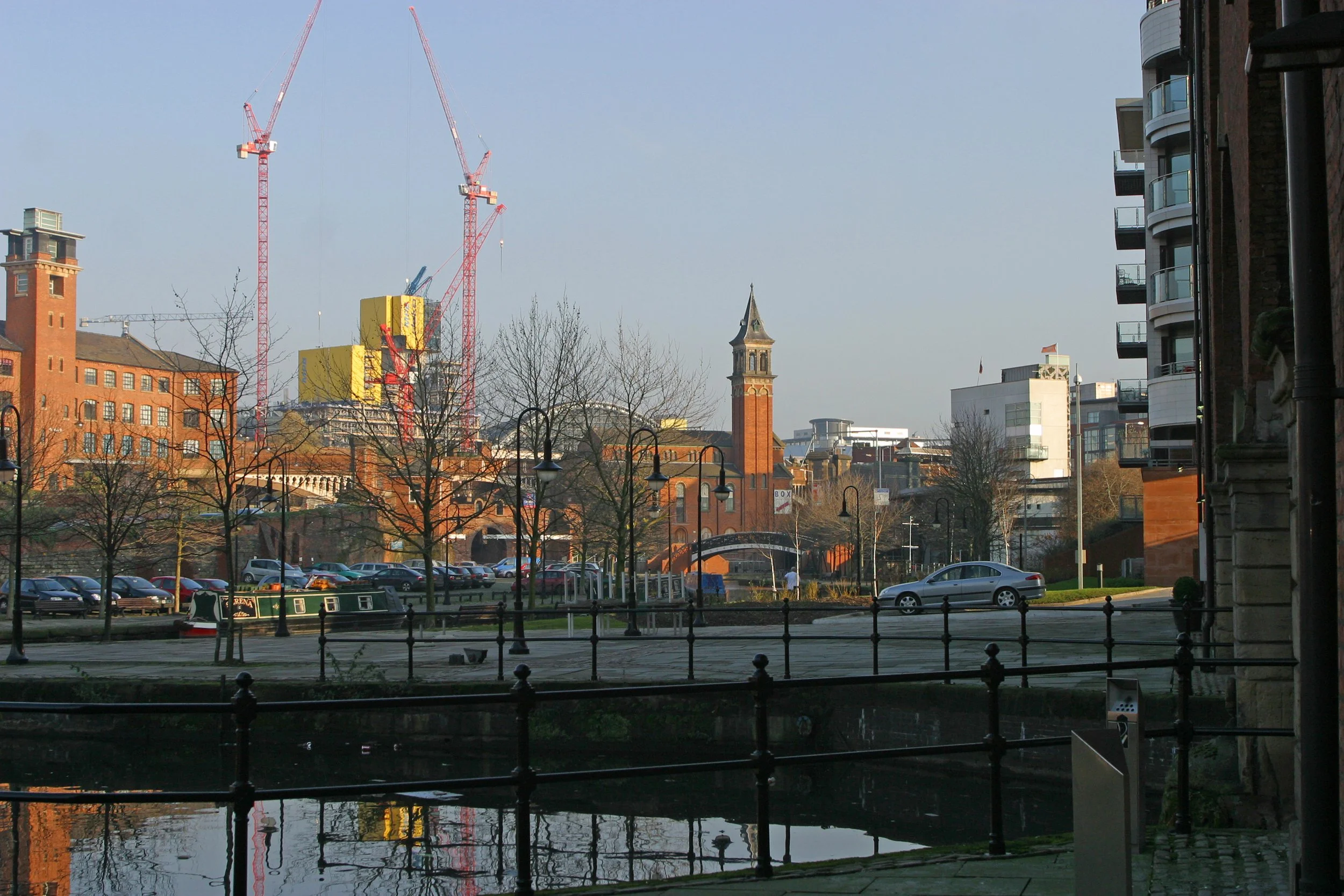
This view is across Castlefield towards SimpsonHaugh Architects’ Beetham Tower while it was under construction in early 2005. Credit: Chris Burnett Associates
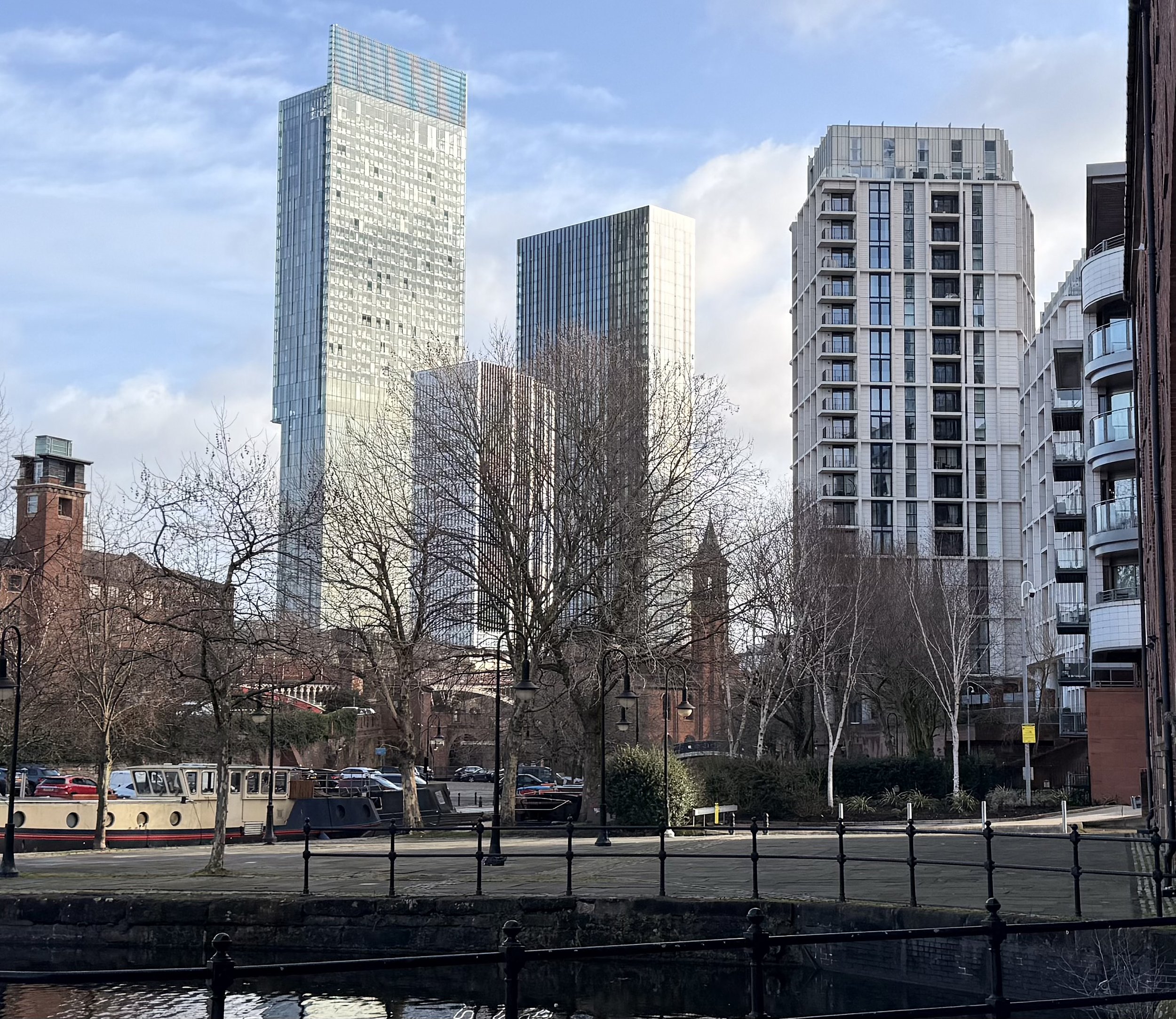
Now Beetham Tower has been joined by two other SimpsonHaugh schemes: the recently finished 22-storey Hampton by Hilton Manchester City Centre and the 40-storey Viadux skyscraper.
Speaking at international conference MIPIM in March, GM Mayor Andy Burnham said that the successful regeneration now taking place in nearby Stockport is as a result of the regional core’s success, and its Mayoral Development Corporation model is being rolled out again in Middleton, Rochdale to the north.
Looking back over the past 20 years, it’s tempting to focus on the skyline. And I do enjoy a before and after shot. They are the visual markers of change that make Manchester such a compelling subject for photographers and commentators alike.
But the real story sits beneath that.
It’s about a city that was forced to pause, took the opportunity to rethink, and came back with a clearer sense of what it wanted to be.
As Sir Howard Bernstein wrote in his foreword to my book:
‘Successful cities can never stand still, and Manchester needs to keep creating the next page. It is a great…and never-ending story.’
To mark 30 years since the 1996 IRA bombing, we are staging a month-long photographic exhibition in June exploring Manchester’s transformation through a series of before-and-after images from across the city.
For more information visit: https://euankellie.co.uk/projects/manchester-then-and-now