
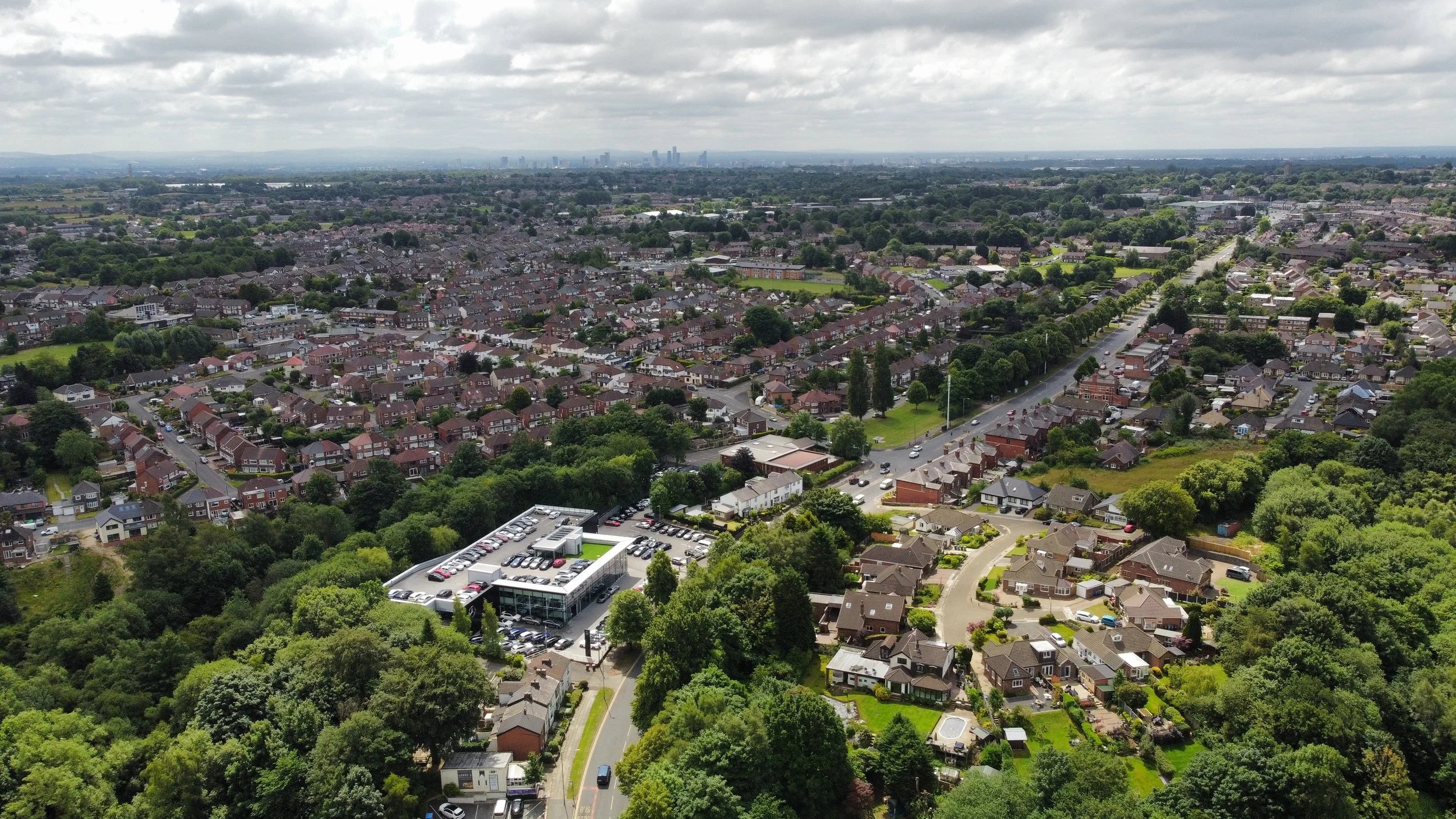
A key trait that makes Greater Manchester (GM) more than the sum of its parts is the collaborative model of the Greater Manchester Combined Authority (GMCA). Not only does each borough retain autonomy over their patch (rather than subsumed into a larger entity), but they all have an equal say in strategic GM-wide decisions too.
This autonomy is important because, just as devolution brings benefits to England’s regions, GMCA’s governance model allows each local authority to respond to its own circumstances in the way it knows best.
And yet, the story of GM’s thriving economy hasn’t been experienced equitably across all boroughs: Wigan, Bolton, Bury, Rochdale, Oldham and Tameside recorded less economic activity by GDP than its southern neighbours.
What’s causing this gap? And what needs to change?
In this blog, we’re journeying north again, to explore the economic priorities of Bury to explore how it is working to change the script.
What’s causing the north-south economic gap?
The northern boroughs’ industrial legacy, and the decline that followed, had a lasting economic impact. Meanwhile, the southern boroughs made a smoother transition into service- and finance-led sectors more smoothly.
Knock on effects on job opportunities, skills and education mean that northern areas are often playing catch up with their southern neighbours.
Understanding what makes a place
Understanding not only a place’s backstory, but also what the data reveals is happening behind the scenes is crucial to put together the right plan of action to tackle challenges.
Bury is categorically not a suburb of Manchester. It’s a historic market town; a local economic hub where traders and farmers would have travelled to sell their wares. Ask any Bury resident or worker what their priorities are and you’ll likely receive very different answers than you would in Stockport.
Over the last decade or so, Bury has sought to develop a complementary (rather than competing) relationship with Manchester. Its focus is on building a sub-regional offer, an alternative, attractive choice, and keeping this question front and centre:
What’s the best way to deliver in Bury?
Balancing competing priorities
In any given place potentially competing priorities must be weighed up against each other.
And with a national agenda that’s very much focused on building “1.5 million new homes” in this parliament, it would be understandable to feel a certain pressure to “build baby build” as newly instated Housing Secretary, Steve Reed, said recently.
So how is Bury looking to respond to the call to action? And how does it decide whether a plot of land should be allocated for new housing or new employment uses?
Housing delivery mustn’t overshadow placemaking
One approach to meet housing needs is to build at higher densities around transport nodes. It’s certainly a logical route for many parts of Greater Manchester, as we’ve recently explored in Stockport.
But if housing density is prioritised above meeting local needs, we’ll create more problems in our quest for good placemaking. We spoke to Bury’s Executive Director for Place, Paul Lakin, who explained:
Bury offers a very different experience from the urban living you can get in a place like Manchester or Salford. Town centre living isn’t always most people’s first choice here: whilst there is a role for urban flats, there’s an opportunity for mid density housing on the town centre periphery, as well as more traditional suburban housing.
The housing agenda is complex, but we’ve got to stay rooted in creating places that will stand the test of time.
Levelling up with jobs, not just homes
And where will these people work?
Northern towns like Bury and Prestwich benefit from excellent public transport into the regional centre, being on one of two original tram lines to open in 1992. And yet, this makes it easy for Bury residents to work elsewhere. Over 20% of Bury’s residents travel to Manchester, while a fraction commute from Manchester to Bury. It’s something that Paul Lakin is fully attuned to:
A key challenge right now is how to create an economic renaissance across the whole of Greater Manchester. The strength of the regional core is a good thing. But there’s also been dilution in other areas. We need other parts of the conurbation to have economic relevance too.
Good transport connections in urban areas bring opportunity and that must be embraced. But we need strong local economies as well as a strong regional core. The planning system plays an important role in thinking ahead to plan for and provide employment where people want it and where will generate the most benefits for everyone.
What’s more, creating a buoyant economy is not the end goal. A healthy local economy is also a key component in improving vital quality of life indicators like social cohesion and mental health.
The Atom Valley vision
The Atom Valley Mayoral Development Zone is focused on just this: stating its ambition to:
“Supercharge the economy and productivity… [and] level-up nationally as well as within the city region”.
The Northern Gateway allocation within the Places for Everyone spatial plan forms the major strategic housing and employment allocation within the Atom Valley. It’s huge: intending to deliver around 1.2 million sqm of employment space in Bury and Rochdale. Phase one has already been submitted in outline for over 600,000sqm of advanced manufacturing, industrial and logistics uses.
Creating a cross-boundary allocation of this size was only possible through a strategic plan, making it another demonstration of GM’s strength in numbers: understanding the challenges and opportunities of each local area and working collaboratively to give the best chance of levelling up across the sub-region.
Planning rooted in reality
Bury’s story shows us what can happen when local planning is rooted in local reality. Growth for growth’s sake doesn’t work, and a blanket approach to housing delivery won’t address the deeper challenges faced by towns that haven’t felt the full force of Greater Manchester’s economic success.
But there’s power in doing things differently.
By backing its own priorities and planning for homes and jobs (in the right places) Bury is starting to shape a new chapter creating meaningful places for people to live, work and age well. Strong local economies are part of that picture.
Levelling up is about understanding what people need. And if we want all of Greater Manchester to thrive, it’s exactly the kind of approach we need more of.
